
As global environments rapidly degrade, the psychological toll on humanity has increasingly manifested as “eco-anxiety”—a condition Panu Pihkala identifies as rooted in feelings of uncertainty and uncontrollability regarding the global ecosystem. [1] Far from a psychological dysfunction, this anxiety is a rational, emotionally congruent response to the realities of environmental degradation and the threat of mass extinction. [2]
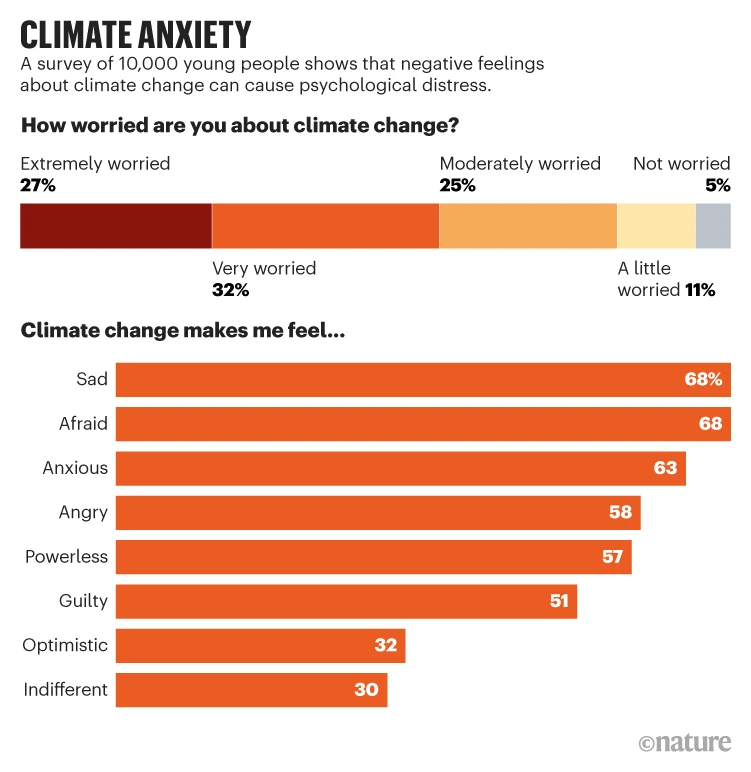
These apocalyptic fears share a fertile crossover with the narrative trope of the Black Death, a setting that inherently binds environmental conditions, human mortality, and the failure of social authority within a single catastrophe. Leveraging this thematic alignment, Asobo Studio’s A Plague Tale: Innocence (2019) and A Plague Tale: Requiem (2022) reconceptualize the historical pandemic as modern eco-horror. The series’ rat swarm mechanics operate as a ludic manifestation of contemporary eco-anxiety, intertwining environmental precarity with a critique of dystopian institutions that actively accelerate ecological collapse.
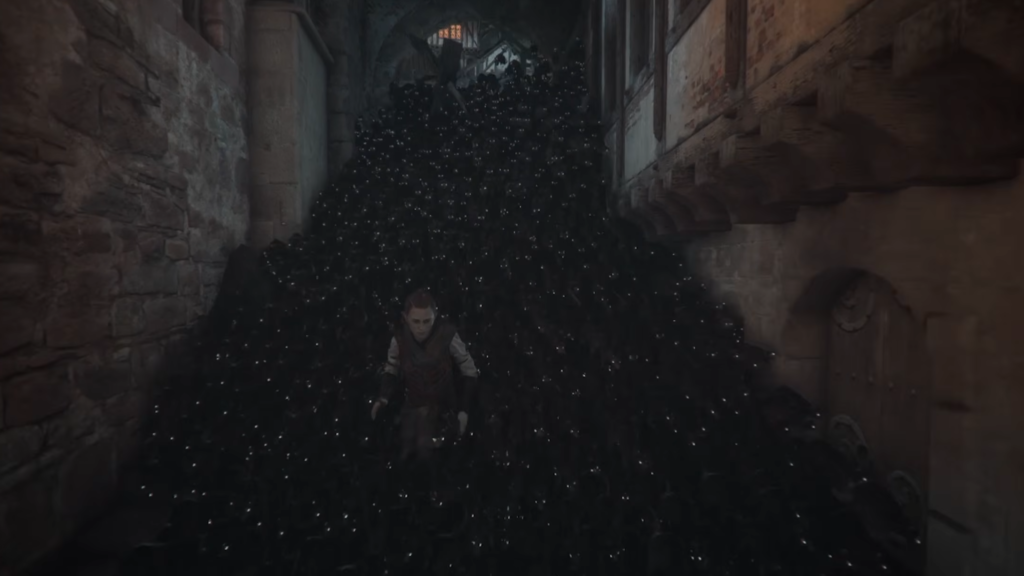
To translate this conceptual dread into gameplay, A Plague Tale renders the rats as an active, insurmountable ecological force. Once a swarm breaches a region, the rats function as a dynamic element of the environment itself. They course around corners and over obstacles; absent the light required to repel them, they quickly overwhelm the player. Because players can neither eradicate nor outrun the horde, they must manipulate their immediate environment to merely delay the inevitable, transforming physical vulnerability into a lived, ludic experience. A notable scene in Requiem materializes the rats as a rampaging tide sweeping through a city, devouring all life and material in its path. Mirroring climate disaster footage of torrential floods washing away infrastructure, protagonist Amicia is left with no option but flight. By physicalizing the plague as an inescapable, fluid mass, the games mechanize the environmental collapse framing the larger narrative.
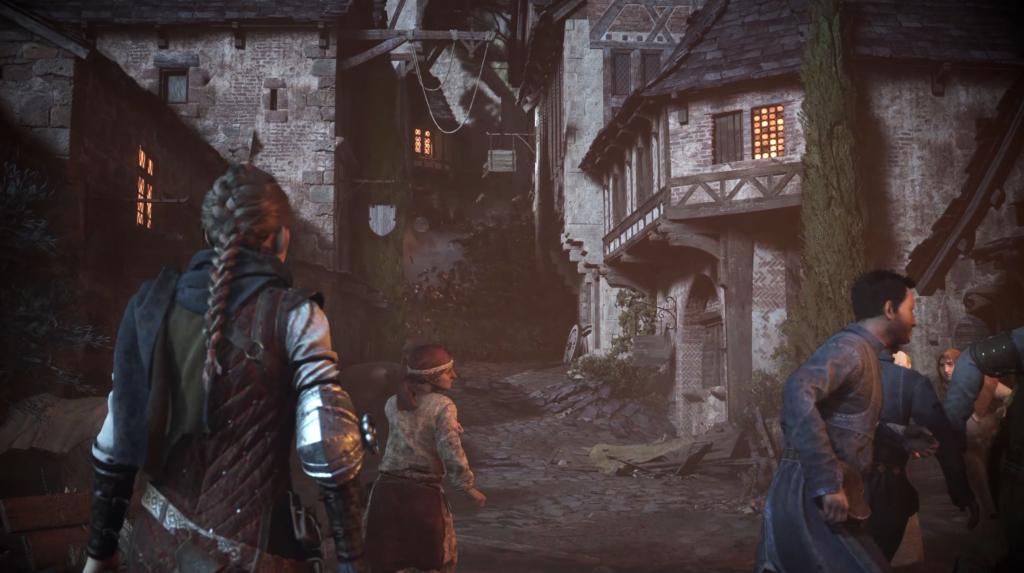
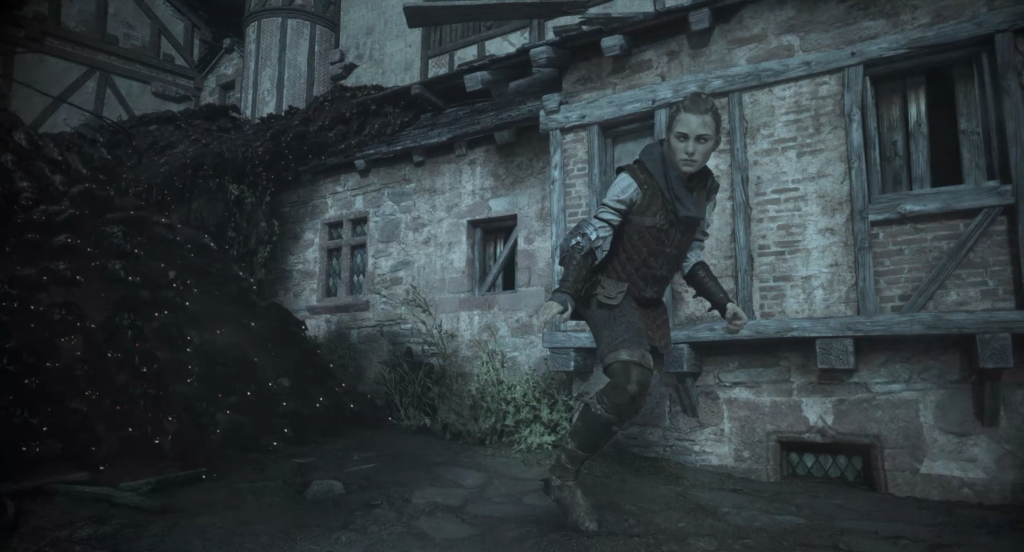
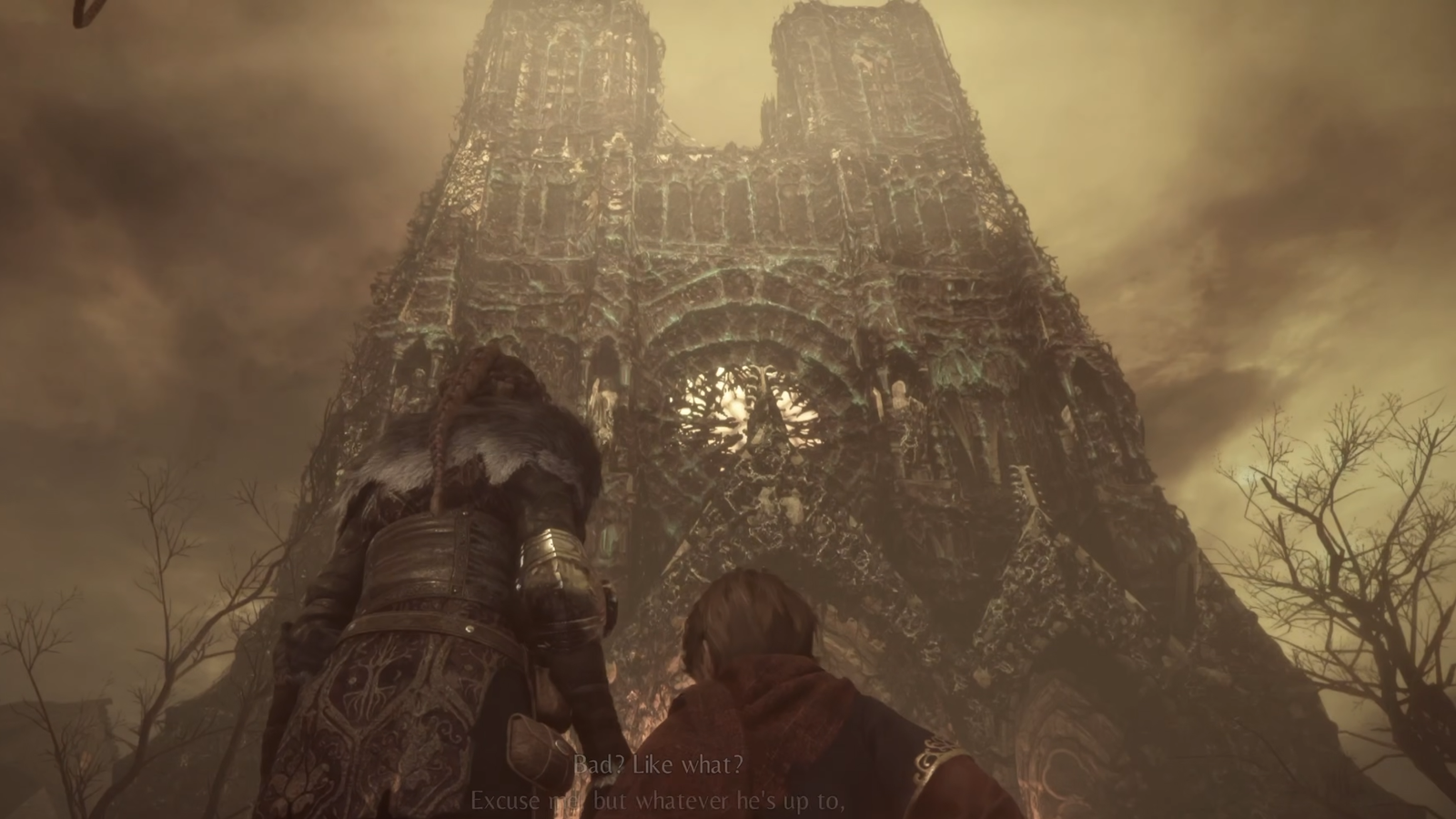
Echoing conventions of the broader eco-horror genre [5], these catastrophic events are not merely inflicted upon humanity but are exacerbated by human action and institutional negligence. The games explicitly link this worsening ecological disaster to the geopolitical and theological machinations of the fourteenth-century Inquisition. The rat swarms emerge intrinsically tied to the Prima Macula—a supernatural bloodline curse acting as the mystical source of the plague—which the Inquisition seeks to monopolize to reshape the world order.
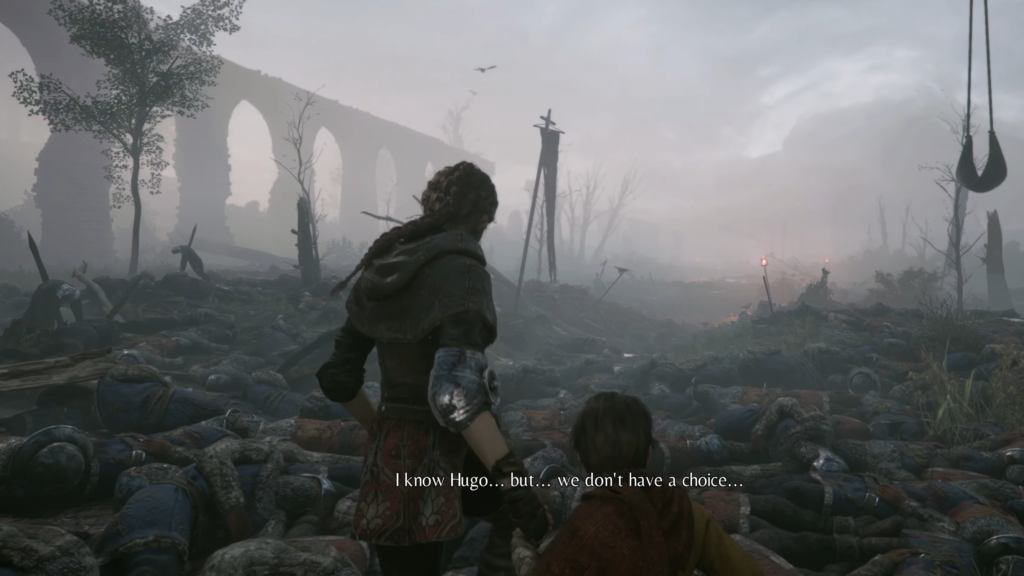
The background devastation wrought by the Hundred Years’ War serves as a literal incubator for these swarms. A pivotal sequence in Innocence forces Amicia to traverse a sprawling battlefield littered with dead soldiers; as she navigates the scarred landscape, rats violently burst from the cavity of a decaying horse carcass to flood the muddy terrain.
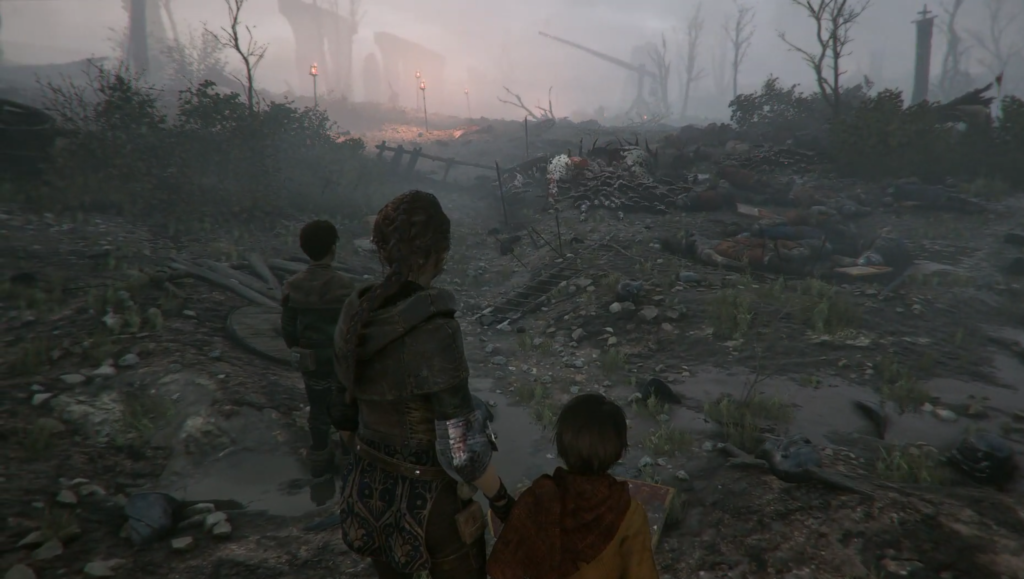
The battlefield collapses the distinction between human violence and environmental catastrophe: the material remains of war literally become the ecology in which the plague proliferates. The Inquisition’s subsequent attempts to weaponize the Macula as a tool for totalitarian control only worsen the devastation. By repeatedly demonstrating the Macula’s violent resistance to human intervention, the games generate profound uncertainty. Attempts to militarize the plague instead produce unpredictable consequences, framing the Macula as a source of eco-anxiety: an unsettling recognition that human systems of knowledge cannot fully anticipate or control the forces they seek to master.
Ultimately, the intersection of swarm mechanics and institutional narrative in A Plague Tale utilizes a fourteenth-century setting to interrogate modern anxieties regarding environmental degradation. By rendering the player mechanically vulnerable and exposing the destructive futility of the Inquisition’s ambitions, the games position ecological collapse as a condition to be negotiated rather than a foe to be vanquished. The series presents a possible past in which attempts at environmental mastery are swallowed by the very ecology they seek to control, offering a grim, speculative reflection on contemporary realities and the self-destructive nature of weaponized ecological crises.
References
[1] Pihkala, Panu. “Anxiety and the Ecological Crisis: An Analysis of Eco-Anxiety and Climate Anxiety.” Sustainability 12, no. 19 (2020): 7836. https://doi.org/10.3390/
[2] Coffey, Yumiko, Navjot Bhullar, Joanne Durkin, Md Shahidul Islam, and Kim Usher. “Understanding Eco-Anxiety: A Systematic Scoping Review of Current Literature and Identified Knowledge Gaps.” The Journal of Climate Change and Health 3 (August 2021): 100047. https://doi.org/10.1016/j.
[3] Thompson, Tosin. “Young People’s Climate Anxiety Revealed in Landmark Survey.” Nature 597, no. 7878 (2021): 605–605. https://doi.org/10.1038/
[4] Boluda-Verdú, Inmaculada, Marina Senent-Valero, Mariola Casas-Escolano, Alicia Matijasevich, and María Pastor-Valero. “Fear for the Future: Eco-Anxiety and Health Implications, a Systematic Review.” Journal of Environmental Psychology 84 (December 2022): 101904. https://doi.org/10.1016/j.
[5] For a thorough study on the genre, see: Bourke, Emily J. “Horror of the Anthropocene: American Ecohorror Since 1945.” Ph.D, Trinity College Dublin, 2019. http://hdl.handle.net/2262/
Biography
Blair Apgar is an assistant professor of Art History at Kutztown University of Pennsylvania; their current work is split between issues of reception of the Middle Ages in modern visual media, and all things concerning 11th century noblewoman, Matilda of Canossa. They have also published on virtual reality and 3D modelling, as well as the potential uses of the technologies in studying sacred medieval architecture. They are currently working on their first monograph on Matilda of Canossa, to be published by ARC Humanities in the coming year.
Brilliant paper, Blair. I’ve brought up A Plague Tale in classroom discussions of my own about the Anthropocenic condition, but you enumerated some things I myself hadn’t realized!
This question goes well beyond the scope of your talk, but what do you think this parallelism with the Black Death means for us, in the context of our current climate crisis? It’s something I have been musing myself, lately. As Monica Green showed in some occasions, the Second Plague Pandemic wasn’t ‘stopped’ as much as it fizzled out eventually. If this is our model of agency to deal with climate change, we’re screwed!
Tying this line of thought with the theme of the conference, do you think they are better medieval/pre-modern tribulations that could give us more room to think about possible futures?
Do you think there’s a certain point where this tips over into a kind of eco-fatalism or eco-apocalypticism? I’m kind of wondering whether the interaction between the medieval and modern ideas here can actually end up serving the function of building a more negative and disconnected view of nature in general by rendering the natural world as not only out of balance and deeply damaged in some way, but actually as fundamentally alien and unpredictable, as a danger of the past that we in the modern world thought we’d escaped rather than an ecocrisis specific to modernity. Does this reinforce the idea that humanity exists in opposition to nature, even if it reassesses that opposition as fundamentally doomed and chaotic?
Thank you so much for this, Blair! I, myself, have studied A Plague Tale from time to time, from various approaches. I have never thought about the rat swarms in this way, and how it can effectively be an allegory for climate crisis. Can you think of other video games which use similar medieval tropes/motifs to comment on contemporary anxieties and fears regarding ecological catastrophe(s)? Maybe Elden Ring, even if very indirectly? Or even Hellblade (the first one and the sequel), also very indirectly, since we have a landscape marked by decay, devastation and a sense of impending doom, but also a romanticisation of that same landscape in the way Senua uses it to traverse spaces and find meaning in her journey?
[…] 3 – Ecology and the Non-Human18h – ‘Tides of Pestilence: Mechanizing Eco-Anxiety within a Fourteenth-Century Dystopia’– Blair Apgar18h20 – ‘The wilderness, self-reliance and community in Medieval Dynasty’– […]