
Skyrim is not a puzzle game, nor is it designed to heavily support such mechanics. However, enterprising modders have utilized its scripting and dialogue systems to provide just this experience. They have chosen Skyrim over engines like Unity or Godot, which power myriad puzzlers, despite the expanded options those provide.
I am not arguing that Skyrim is secretly a superior option. Rather, these puzzle mods are an excellent example of some of the advantages, and tradeoffs, that modding provides creators over indie games.
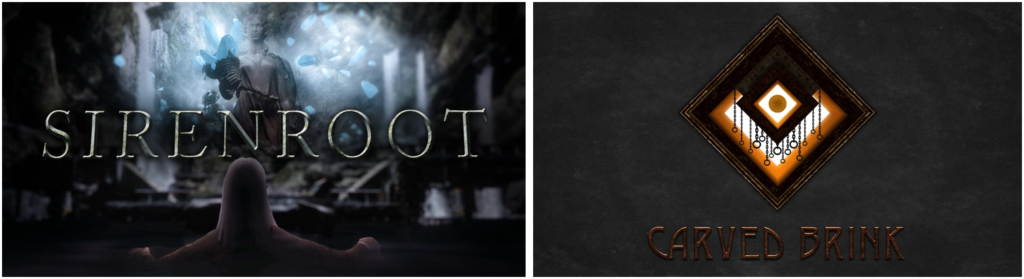
Author familiarity may explain many of these mods, with authors expanding on past experience making adventures by then pushing into puzzles. And, many of Skyrim’s puzzle mods are dungeons. Mods like SIRENROOT – Deluge of Deceit by Everglaid and Carved Brink by Haem Projects use puzzles to enhance dungeon traversal, and in the other direction, add combat and treasures to expand both the difficulty and reward of their puzzles. Integrating puzzles provides its own experience.
Established content is one of the most important advantages that modding provides creators. Game engines may have fewer limitations, but you start from scratch. With mods, author slot their puzzles into existing content.
This is even true of Skyrim mods that lean more towards pure puzzlers. Both The Dark and The Light by dafydd99 and The Dwemer Mining Facility by atskySSSl4Yer provide puzzles that are more independent of the larger Skyrim experience. However, they still take advantage of the existing mechanics and art to construct their content, and draw players into them. Tutorializing is key to games, particularly puzzles. Offloading some of this onto systems players are already familiar with is as useful as utilizing established art and scripts. Player familiarity is as much an advantage as author familiarity.
Finally, I want to touch on visibility. While the ultimate audience of “Skyrim players” is smaller than “all gamers,” there is also less competition with other content – especially when you can set yourself apart with novel content, like puzzles. Mods come with built in audiences separate from the larger platform.
An excellent comparison here is the mod The Forgotten City by TheModernStoryteller, which the author later recreated as an indie game. As a mod, it stood out for its cyclical story, mysteries, and puzzles – elements which were all retained in the standalone title. As an indie game, it was possible to push these elements further, but they also needed to recreate content Skyrim had provided. As a newer title with higher fidelity graphics, there were also expectations Skyrim hadn’t had in 2011, like facial expressions, a challenging feat for a small studio. [1] Both the mod and game were very successful, and both played to the strengths of their platforms.
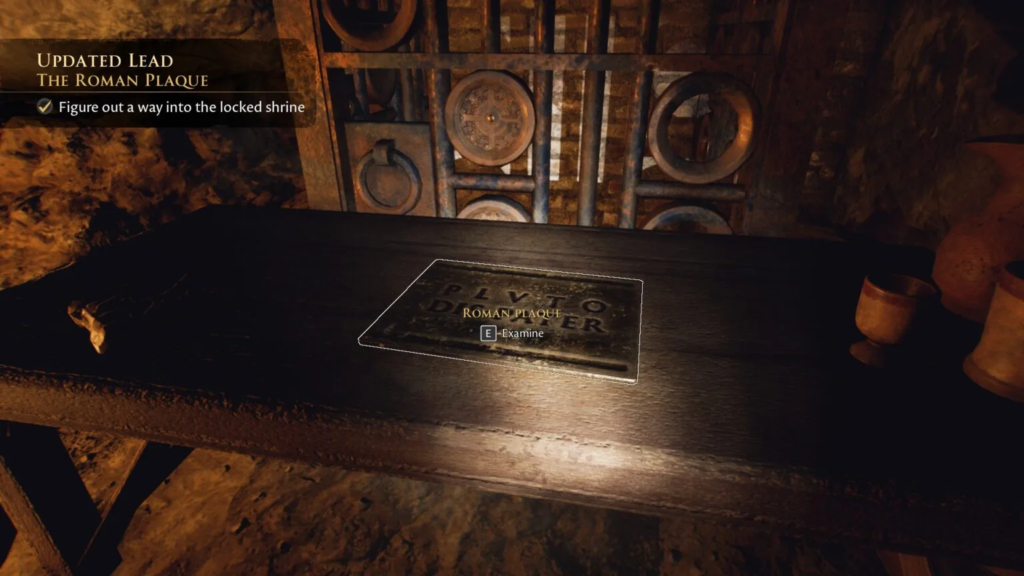
All of this extends to modding as well. Authors weigh the advantages and disadvantages of the platform – and the advantages modding provides developers should not be discounted even if an engine is more powerful or flexible.
References
[1] Nick Pearce, “How a Lawyer Sacrificed his Career to Redevelop his Skyrim Mod | The Forgotten City Documentary,” Noclip, YouTube video, 18:47, https://www.youtube.com/watch?v=CSqHTxgcXiI
Author Bio
I am the Senior Community Content Manager at Bethesda Game Studios. For over a decade I have helped oversee our community modding initiatives, working to support and promote these creators.
Yeah, as someone who started out modding games, offloading a lot of engine and mechanical stuff and being able to offer people an experience within an existing framework means crossing a much lower bar than trying to persuade people to download and play a totally new game. I still need to finish my Skyrim modding project which I started last year… maybe over winter sometime!
To link this back a bit to the medievalisms side – one thing I’ve been thinking about developing games recently (I’m getting started on my main next RPG project and developing in 3D for the first time which gives me a few new options) is this specific question of puzzles and puzzle mechanics, in some ways puzzles are things people have enjoyed for centuries but in other ways the ways we put them in dungeoneering environments in games are very contrived. That’s then of course reinforced by the way that game puzzles have to be doable by a normal player in a normal amount of time, which makes the usual “NOBODY has unlocked this FIENDISH DWEMER BOX in THOUSANDS OF YEARS” framing a bit of a let-down sometimes. Do you see in Skyrim mods any attempt to try and make these puzzle elements “mesh” more with the surrounding world smoothly, or is there just an acceptance among players that a puzzle is inherently a minigame and has to have that contrived element to it?
Today I’m just failing at comment mechanics! My response is below.
Thanks for this, Andrew! Thinking about existing games as an alternative to engines makes me think of homebrewing, and how some people deliberately *prefer* to design using subverted proprietary platforms, for a matter of sport/challenge as much as functionality. Do you see such a spirit among the modding community? The feeling that “Yes, I could have done that on Unity, but I *opted* to make it a Skyrim mod instead, for such and such reasons?”
Also, and strictly out of my ignorance, what is the legality of mods-turned-standalone games? I’ve heard of many such cases in the industry at large, but I assume it isn’t as simple as putting it together and shipping, right? What say the owners of the original game have over the new content?
Most modders I know have no serious interest in designing a game from the ground up. Or rather, they recognize they don’t have the full range of skills to make that possible, and would rather spend their time honing one skillset than becoming a jack-of-all-trades. Also, successful modders usually become active in the modding / game communities, and want to continue participating.
When I think of exceptions, they’re folks who who do both because each one scratches a different itch. These people start off making a mod because they enjoy a game, but want to tweak it or expand it, and as developers have those skills. Some do start by making mods, and keep picking up new skills until they can branch into game design – or are part of a team where enough folks want to pivot. SureAI is an example of an indie studio that pivoted to modding and then back to indies (https://sureai.net/).
It’s difficult for modders to change the puzzles themselves in Skyrim, but several have aimed to adjust the environment so the puzzles fit better. This usually means a dungeon that reinforces that it’s been locked off, and may be unlit and lack perishable items. There’s certainly player chatter in favor of such dungeon design, but I’ve seen far more discussion than realized projects.
Crafting a poorly lit dungeon is often more difficult than a well-lit one, especially as they’re inconvenient for any character utilizing two-handed weapons (like the ever-popular stealth archer). Well-used, a subtle use of lighting is the most effective way to guide players through a location, so it’s a hard tool for an environmental designer to give up. Limited items can lead to balancing issues.
If I recall correctly, Clockwork has sections like this, and balances it by having the player go on multiple separate excursions (https://www.nexusmods.com/skyrimspecialedition/mods/4155). Black Gold Mine has a mix of well-lit and dim areas, with a clear delineation between active mine and surprise ruins (https://www.nexusmods.com/skyrimspecialedition/mods/120654). Arcwind Point Dungeon generally makes you feel like the first living person to visit in some time, although it isn’t especially dark (https://www.nexusmods.com/skyrimspecialedition/mods/42484).
I think games with modern settings handle this better, since access to electricity via generators and switches allows access to lighting to itself be a puzzle. One could simulate this with magic, but then you’re trading one contrivance for another.
That’s interesting! There’s actually some pretty interesting work on the phenomenon of medieval people more actively reopening graves and tomb structures with projects like PresentDead (https://presentdead.uni-graz.at/en/) which might be an alternative way to embed having more recent/perishable items in a tomb. I guess in some ways the city halls of the dead do this in Skyrim anyway re having priests who regularly interact with the dead, but I’ve not seen it used as much as a principle for dungeoneering, I suppose partly on grounds of “if people were coming here regularly to give offerings to the dead, there probably wouldn’t be so many loaded traps around”. I guess in a way the whole dungeon concept framework is such a contrivance that it makes it harder to “embed in its world” in that sense.
Wonderful thoughts, Andrew! Thank you for this. I was wondering if you think this tendency to make mods for Skyrim which revolve around puzzles might be related, in some way, to how puzzles/riddles were such a profound part of popular culture/oral tradition in the Middle Ages. I would love if you could elaborate on this. Thank you!
Short answer: yes, but probably not consciously.
The long answer no doubt varies by language. But, for English language content broadly, I’m not sure if authors are consciously thinking of their inspiration here. Rather, “fantasy has riddles.” Granted, this is because the genre draws on cultural sources that valued riddles.
I suspect, if pushed, modders would more likely cite “Greek mythology” than any other source for including puzzle elements. And not just The Forgotten City, which was recreated with a Roman aesthetic. While I don’t generally get big sphinx energy from puzzle mods, they tend to embed their puzzles into the sort of epic adventure that I feel is more readily credited to the Classical period. Granted, this is largely due to the oversized shadow that Greek mythology holds in Western literature, and the fantasy genre specifically.
If we sat down with these authors, we’d probably be able to tease out broader sources, particularly 18th and 19th century collections of fairy tales, legends, and mythologies from across Europe. But these are the major historic sources for the genre directly, and indirectly through 20th century pulp and, of course, Tolkein. So, we’re back around to “fantasy has riddles.”
[…] Kings III: Modding as a counterfactual historiographical exercise’– Maxime Kremer16h20 – ‘Skyrim Puzzles Mods: Finding Indie Freedom within Mainstream Gaming’– Andrew […]