
“Medievalist fantasy games like Metaphor: ReFantazio openly engage with utopian thinking and our capacities to imagine possible worlds”. [1] This line from the call reached me while I was playing the game and puzzling over its setting, Euchronia, and over its dependence on magical devices — true magic being banned. The question this raises is central to Atlus’s 2024 game, and it also puts other medievalist games into the perspective of possible worlds and possible pasts. If a game setting puts nearly everything under scrutiny, which concepts go unquestioned, and why?
1. ou-topos and the added sign
Read literally, ou-topos is a non-place. For what a place is, I follow Michel de Certeau’s distinction between place and space. A place is “an instantaneous configuration of positions”; space, by contrast, “is a practiced place”. [2] Matthias Däumer and I have argued that the virtual space of play is therefore already a utopia in structural terms, and that the avatar is what generates it. [3] It remains a non-place because we cannot enter it except through the avatar that generates it. A mime’s invisible wall shows how the sign gets attached [4]: when the mime runs into it and breaks their nose, the wall is a dystopia; when it shields them from a pursuer, it is a utopia. The sign depends on what is done with the wall, not on the wall itself. The question, then, is not whether a world is utopian or dystopian, but where the sign gets attached. In the games discussed here, it gets attached to blood.
Historically, the line runs the other way round. In Caroline Walker Bynum’s account of late medieval devotion, blood is not the mark of deviance but the mark of the sacred: “‘Holy’ means ‘anointed’ or marked ‘with blood’” [5]. Blood is “the central symbol and central cult object of late medieval devotion — and perhaps the central problem as well”. [6] What is contested is not whether blood works, but who may handle it and under what name; in the accusations of ritual murder the act comes close to sacrifice and is never called that, because the accused are thought of as murderers rather than as sacrificers [7]. Bynum’s material is northern German and mostly fifteenth-century, and not quite the Middle Ages these games have in mind. That is an argument rather than an apology: the late Middle Ages are the period in which blood stands at the centre.
Four games in my corpus inherit that sorting logic and reverse its value. [8] In Dragon Age II, blood mages are maleficarum, “hunted mercilessly”, and the line is drawn by an institution, the Circle and its templars, rather than by the substance. [9] In Divinity: Original Sin II, the Source that is persecuted is at the same time divine. In Elden Ring, Mohg, Lord of Blood, carries a divine lineage and the Omen taint at once: one blood, two verdicts. Bloodborne is the limiting case, since blood there is not forbidden but ubiquitous, currency and experience in one. Where Bynum’s deviance attaches to whoever performs the rite without licence, these worlds make the rite itself the offence: the same sorting machine, the sign reversed.
Metaphor: ReFantazio, the game the call names, puts that ordering on display. Strohl, one of the protagonist’s companions, reports what is said about children of mixed descent: “The traditionalists always say mixed blood children are abominations. Terrible omens” (fig. 1) [10]. He is quoting; a few lines later he sets the word in quotation marks himself (fig. 2), and Joanna turns it back against the world that produced it. The sign is added later, and the game shows it being added. The protagonist’s own book, a novel about our present, holds that it is “a sin to impose injustice due to one’s appearance, lineage, or birth” (fig. 3) [11]. The utopia of this world is the abolition of the sorting Euchronia lives by. The same world appears once more on a mural, with high-rises and a mushroom cloud (fig. 4), and Strohl draws the conclusion: “S’pose that means it wasn’t much of a utopia, right?” [12] The place stays the same; only its sign changes. However, the half-blood prince who ends the dynasty still becomes king as the king’s son: this world negotiates blood, and it does so with blood.
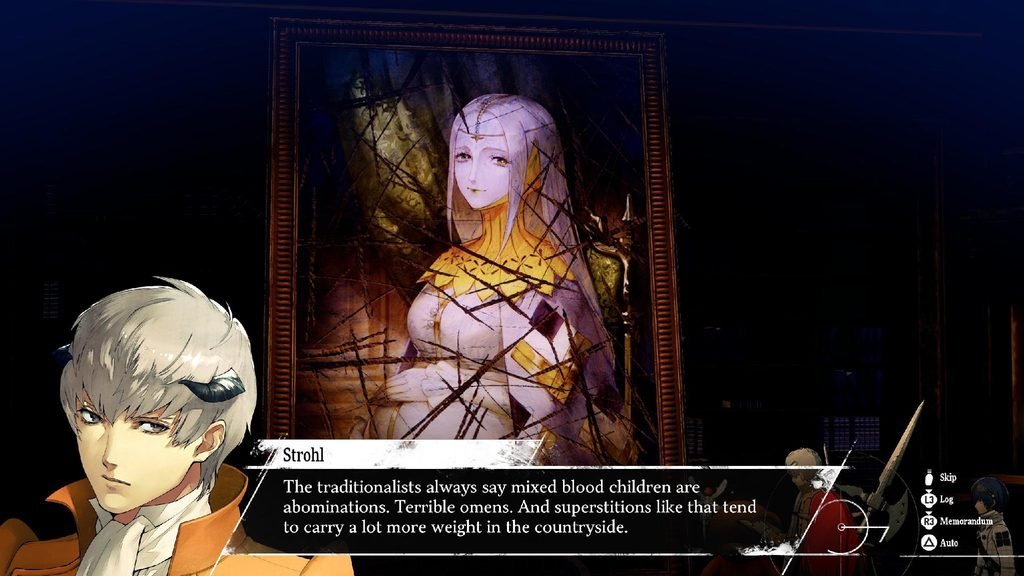
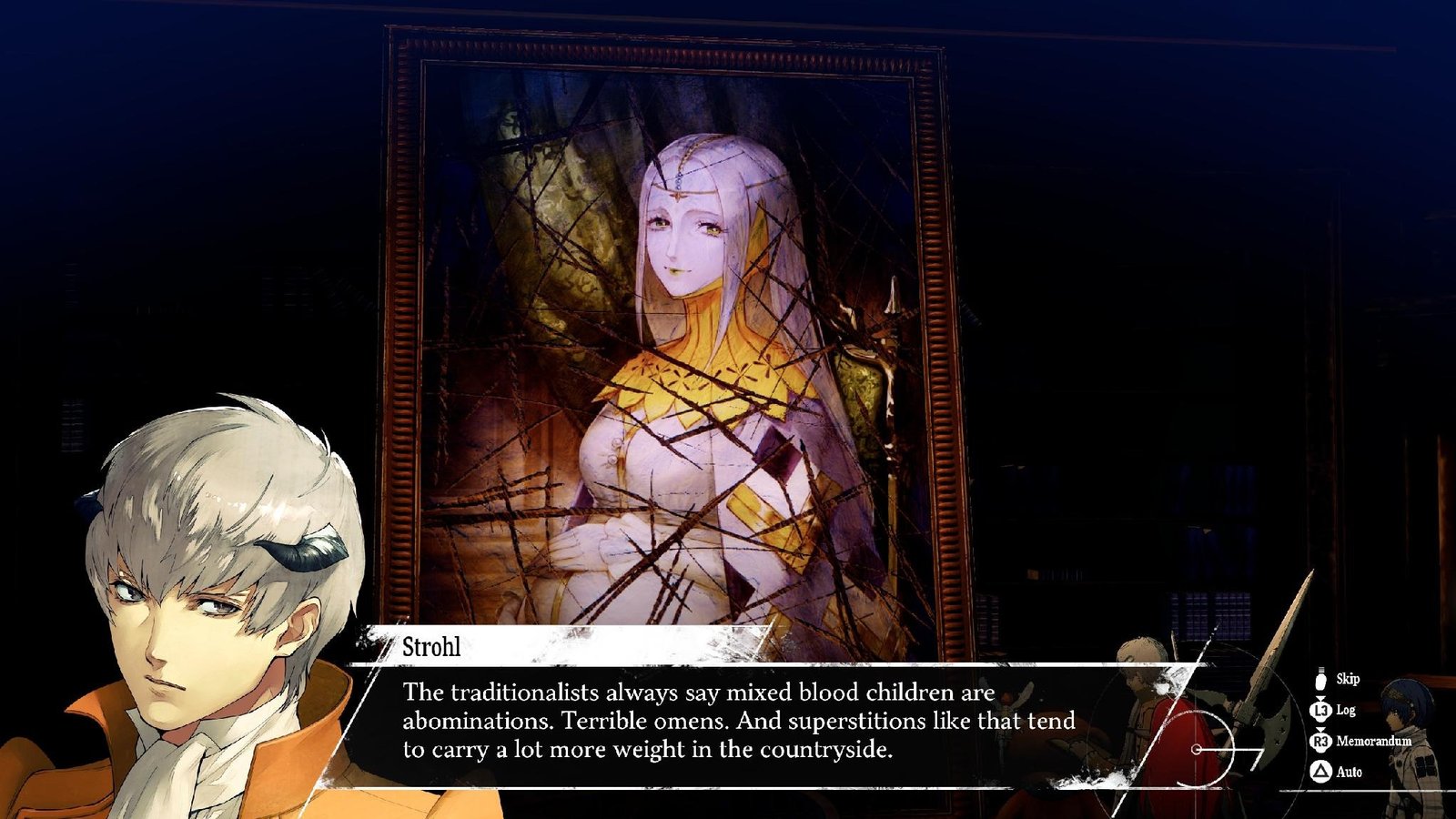
Figure 1. Strohl reports what the traditionalists say about children of mixed descent. Studio Zero / Atlus, Metaphor: ReFantazio, Sega, PC, Windows, 2024; screenshot by the author, 3 May 2026.
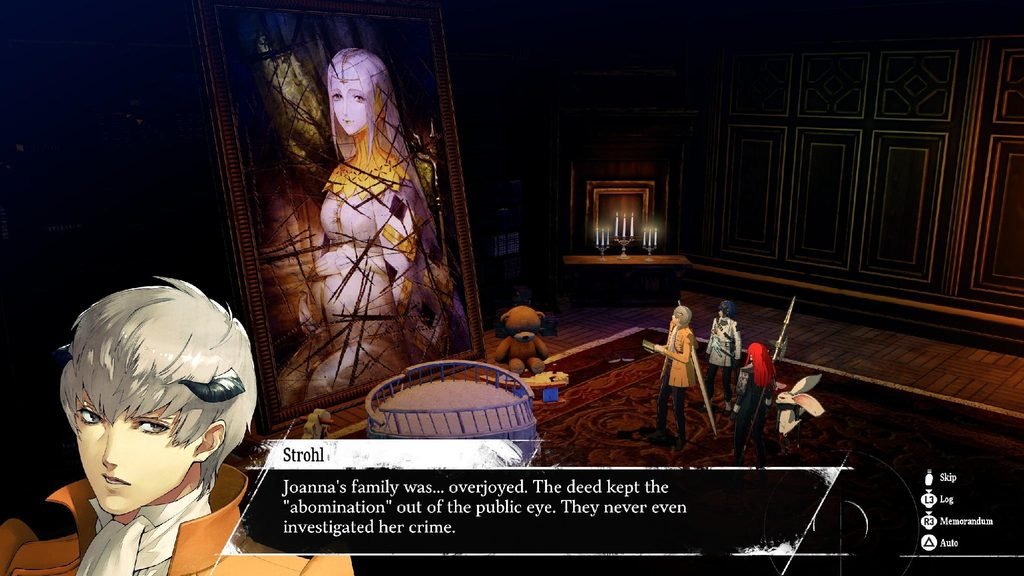
Figure 2. A few lines later, the same speaker sets the word in quotation marks. Studio Zero / Atlus, Metaphor: ReFantazio, Sega, PC, Windows, 2024; screenshot by the author, 3 May 2026.
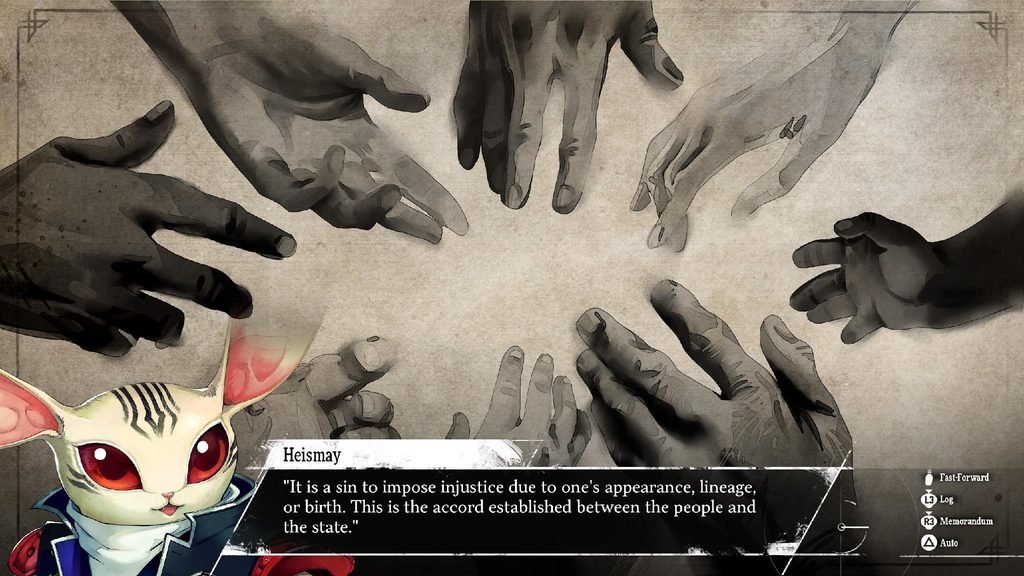
Figure 3. The protagonist’s book on the world it describes. Studio Zero / Atlus, Metaphor: ReFantazio, Sega, PC, Windows, 2024; screenshot by the author, 3 May 2026.
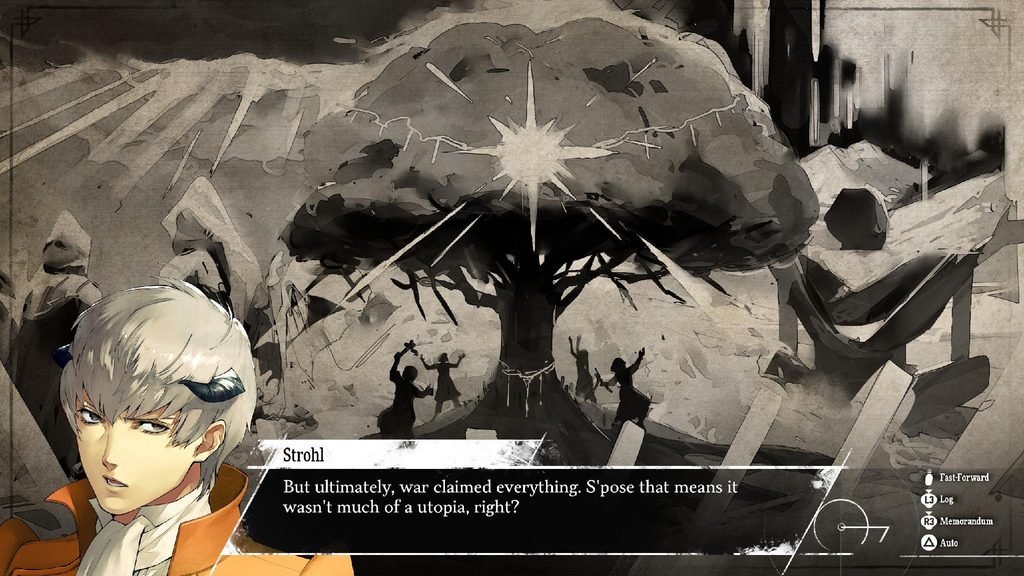
Figure 4. A mural of the old world that the protagonist’s book calls a utopia. Studio Zero / Atlus, Metaphor: ReFantazio, Sega, PC, Windows, 2024; screenshot by the author, 20 September 2026.
The same finding arrived from outside. In a podcast produced by students in my courses, one group concludes about Vladimir in League of Legends that he is “really only a vampire in terms of aesthetics”[13] ; a second group finds the vampirism mechanically interchangeable, since an ordinary mage or blood mage would have served and the vampire only explains how the blood is obtained. [14] Two groups, two corpora, one result: the form comes first and the meaning is supplied afterwards.
That is the possible past these worlds import. It is not the medieval one, in which blood stands at the sacred centre, but a later one, in which blood already carries its sign.
[1] Call for Papers: MAMG 2026, online at: The Middle Ages in Modern Games, https://middleagesinmoderngames.net/announcements/call-for-papers-mamg-2026/ (19 September 2026).
[2] Michel de Certeau, The Practice of Everyday Life, trans. Steven Rendall, Berkeley / Los Angeles / London 1984, 117.
[3] Matthias Däumer / Peter Färberböck, Der Avatar zwischen Utopie und Dystopie. Ekstase, Sensing und De-Sensing in mittelalterlichen Höllenreisen und dem zeitgenössischen Ego-Shooter, unpublished paper, conference “Game Over? Dystopia x Utopia x Video Games”, University of Salzburg, 15 November 2024, section 1.2. See also IMAREAL, Sensing Materiality and Virtuality: project website of the Institute for Medieval and Early Modern Material Culture, https://www.imareal.sbg.ac.at/en/research/sensing-materiality-and-virtuality-en/ (19 September 2026).
[4] Däumer / Färberböck, Avatar, section 1.1.
[5] Caroline Walker Bynum, Wonderful Blood. Theology and Practice in Late Medieval Northern Germany and Beyond, Philadelphia 2007, 191.
[6] Bynum, Wonderful Blood, 258.
[7] See Bynum, Wonderful Blood, 239–244.
[8] Studio Zero / Atlus, Metaphor: ReFantazio, Sega, PC, Windows, 2024; Bioware, Dragon Age II, Electronic Arts, PC, Windows, 2011; Larian Studios, Divinity: Original Sin II, Larian Studios, PC, Windows, Definitive Edition, 2018; FromSoftware, Elden Ring, Bandai Namco Entertainment, PlayStation 5, 2022; FromSoftware, Bloodborne, Sony Computer Entertainment, PlayStation 4, 2015.
[9] Piggyback Interactive, The Complete Official Guide to Dragon Age II, [n. p.] 2011, 253 and 257, quoted from Tess Watterson, Gaming the Witch. History and Witchcraft in Fantasy Video Games, Berlin / Boston 2026, 70.
[10] Studio Zero / Atlus, Metaphor: ReFantazio, screenshot by the author, 3 May 2026 (Martira, Strohl on the traditionalists).
[11] Studio Zero / Atlus, Metaphor: ReFantazio, screenshot by the author, 3 May 2026 (Heismay reading the protagonist’s book).
[12] Studio Zero / Atlus, Metaphor: ReFantazio, screenshot by the author, 20 September 2026 (Virga Island, mural of the old world).
[13] IMAREAL (2026): Blutmagie Teil 1. Vom Lord of Blood bis zu Vladimir dem Nicht-Vampir, Sonic Trinkets, episode 3.02 [Podcast]. published on 15 July, online at: https://open.spotify.com/episode/0AyJP3DtyFfPMGxK2V7Amg (19 September 2026), here [00:59:02]. In the original: “Es ist wirklich nur auf die Ästhetik ein Vampir.” Translation mine.
[14] IMAREAL (2026): Blutmagie. Teil zwei, Sonic Trinkets, episode 3.03 [Podcast], forthcoming 1 October 2026, here [00:16:15]. The series is online at: https://open.spotify.com/show/3XG2u64HdgjOmNJvOwoW0k (19 September 2026); the episode link will be added in the comment thread. In the original: “man hätte auch einfach die Hauptfigur mit einem nicht Vampir ersetzen können und einfach vielleicht einen normalen Magier oder Blutmagier hinnehmen […]. Es wird dadurch halt nur erklärt, wie wir Blut bekommen.” Translation mine.
Biography
Peter Färberböck works at the Institute for Medieval and Early Modern Material Culture on medieval history and Digital Humanities. His research focuses on medievalisms in digital games; his doctoral thesis on blood magic in this medium is written within the doctoral college “Interdisciplinary Study of Historical Cultures” at the Interdisciplinary Centre for Medieval and Early Modern Studies, University of Salzburg. He draws on performance studies and historical praxeology, particularly in the traditions of Marcel Mauss, as well as on media studies.
I think that concept that blood and sacrifice end up representing the opposite of the divine is a really interesting one, and I guess reflect certain more modern anti-material religious logics.
I guess one thing I wonder, though, is whether this gets supercharged by modern distance from death, both animal and human. I’m over thirty and I’ve never seen, say, a cow or pig get slaughtered in front of me, or seen someone die in a traumatic way. It would have been presumably vastly rarer for that to be the case for a medieval counterpart. So is blood in a sense materially more taboo or alien for us than for our medieval counterparts, the idea that it could be shed without it having a deeply weird and sinister connotation or a completely all-encompassing zealotry much harder for us to comprehend?