
Historical games provide players opportunities to reshape history, or even counter-narrate the ‘original’ history through intentional or unintentional anachronism. In the Japanese simulation and adventure game Uncharted Waters IV/Daikoukai Jidai IV (literally ‘the great age of sailing’) (Koei, 2000), players can imagine a different world set in the late medieval and early modern periods in the 15th and 16th centuries.
In this game, players can control one of seven diverse protagonists, sailing across the world to become a champion of sailors and to preserve their countries from colonisation or conquest. Among the characters, the only female character, Huamei Maria Li, is an interesting example of historical imagination and counter-narration. Born and raised in a traditional Chinese admiral-general family, Li experienced the decline of the Ming dynasty, tormenting both her family and her people. To prevent China from becoming a colony of Western countries, Li recruited multicultural, talented navy crews from China, Japan, Russia and France, and contributed to efforts to defeat the Japanese pirates and English colonisers.
The storyline of Huamei Maria Li’s maritime journey reflects the historical imagination of the Japanese developers towards Chinese history, and the multilayered identities and creative power of people in a dramatically changed society.
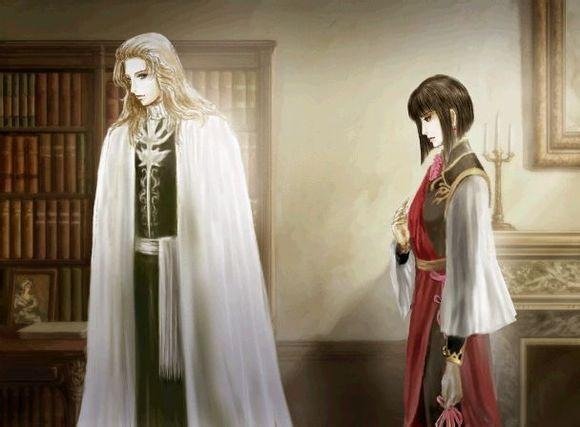
Figure 1. In-game illustration of Maria Huamei Li and her crew, the Russian sailor Ian Dukov
Historically, Japanese pirates were a primary threat to the Ming Dynasty, and the threat was finally prevented by the famous general Jiguang Qi, who also wrote the poem referenced in the title (‘I do not seek a marquis title but peaceful seas’). In the nineteenth century, China was partially colonised by the United Kingdom after the outbreak of the First Opium War in 1840, which also represented the beginning of modern Chinese history (Lovell, 2011). Therefore, Huamei’s storyline delicately incorporates Jiguang Qi’s military success against the Japanese pirates, reversing a sorrowful and painful colonised experience into a glorified conflict against the ambitious colonisers. In popular culture, Chinese players also tended to link Huamei and Jiguang together as prominent figures in successfully defending their country from invasion.
In other protagonists’ storylines, Huamei Li also serves as an important NPC who preserves her country from decline and protects her beloved people. She is the only protagonist who can join other protagonists’ crews to finish their storylines together. This shows globalised cooperation in defending their countries’ liberation (for example, defending Portugal or Sweden from neighbouring countries and institutions), or fighting for independence from the colonisers, such as the Native American protagonist Tiaru Waman Chaska’s storyline. Overall, in Huamei’s storyline, developers and players together reproduce the popular reception of ‘the great age of sailing’ from the exploitation and expansion by Western European colonisers to the defending and liberation of the colonised countries themselves.
References
Koei (2000) Daikoukai Jidai IV Porto Estado Powerup Kit. PC Game. Koei.
Lovell, J. (2011) The Opium War: Drugs, Dreams and the Making of China. London: Pan Macmillan.
Author Bio
Hanjun Shi is a PhD researcher at the University of the Arts London. Their research focuses on classical and medieval reception in digital games, such as Genshin Impact, Pentiment and Cyberpunk 2077. They are also a game narration designer working on the fantasy adaptation of classical history and mythology. They are very happy to live in a community with many adorable kittens.
Thanks for this!
I haven’t played this game, so a question about its anti-colonial narratives: does the game reflect at all on China’s own Imperial status, or does it pursue a fairly simple dichotomy in which China is in the ‘colonised’ category? It’s noticeable that your listing of Huamei Li’s crew is all China plus Japanese and Western countries, rather than being more representative of the wider colonised countries of the region (particularly thinking eg Philippines, SE Asia). Where do those places sit within the game’s imaginary of early colonisation as a process?
Thank you for this paper, I haven’t played it either but this made me really curious about it so I was just having a bit of a read about the series and it looks like this is the fourth of the Uncharted Waters games and that it quite significantly changed things from the earlier version to bring in these perspectives more. I was wondering if you could situate it a little amongst other games from this decade or so – is this use of the female character amongst the group of potential protagonists quite common amongst these kinds of Japanese strategy games or do you feel it’s doing something different here that relates to the setting itself?
Thanks for this – I’m another one who doesn’t know the game, but it sounds really interesting – I will have to look it up! I was wondering about audiences for some of these games – a lot of the games coming out of the Chinese industry seem to be primarily focused at a Chinese audience of players; do you get the sense that this game or others like it are looking to extend some of these possible history accounts to international audiences as well, and if so, does that ever change how they portray these histories?
[…] of Hell: Kleopatra, Lilith, and Possible Pasts in Medieval Fantasy Games’– Kurtis Pope10h20 – ‘‘I do not seek a marquis title but peaceful seas’: The imagination of an alternative Chinese …– Hanjun […]
I’m intrigued by the looks of Ian Dukov. Japanese games (and also manga/anime) often codes Westerners as fair-skinned blondes, even if the historical characters were not necessarily blonde, or come from a country particularly associated with blondness (cf. e.g. the Portuguese characters in some of the Nobunaga’s Ambition series).
Does Uncharted Waters commit to stereotypes like this?