
In contemporary geopolitical conflicts, historical representation is systematically weaponized across interactive media (Kot, 2026; Games Gathering & UCF, 2024). As documented in empirical research on Russian historical propaganda (Re-Vision of History; Yermolenko, 2019) and video game studies (Games Gathering & UCF, 2024), Russian state apparatuses have long promoted alternative historiographies framing Russia as the sole heir to ancient Slavic civilization. As the UCF report documents, “a significant part of Russian authors even then had a pronounced imperial complex and carried it into mass culture, including video games” (Games Gathering & UCF, 2024). The strategic objective of this revisionism was to erode Ukrainian national identity, erase regional agency, and justify absorbing Ukraine into a centralized “Russian World” (Russkiy Mir) (Yermolenko, 2019).
Following the 2022 full-scale invasion, Russian state-backed and commercial game development radically accelerated this strategy (Games Gathering & UCF, 2024). Operating through state-funding infrastructure like the Internet Development Institute (IRI), which allocated billions of rubles for “patriotic education” and “SVO” support, projects such as Cyberia Nova’s Smuta (2024) and Mundfish’s Atomic Heart (2023), alongside viral meme-driven phenomena like Lizards Must Die 1-2 (Smola Game Studio, 2023-2025), embedded anti-Western, autocratic, and neo-imperial mythologies into digital entertainment. By subsuming Kyivan Rus and early modern borderland heritage into a monolithic imperial canon, these games instrumentalize virtual history to legitimize territorial aggression and state-sponsored youth militarization (Games Gathering & UCF, 2024).
In response, Ukrainian and regional Central European developers have mounted a vigorous digital resistance to reclaim cultural sovereignty, historical roots, and truth (Kot, 2026). As detailed in the Ukrainian Games of War research initiative, interactive media has transformed into a vital frontline for cultural survival, counter-propaganda, and memory preservation (Kot, 2026). Ukrainian developers operationalize medieval and early modern historical authenticity across two primary ludic categories (Kot, 2026):
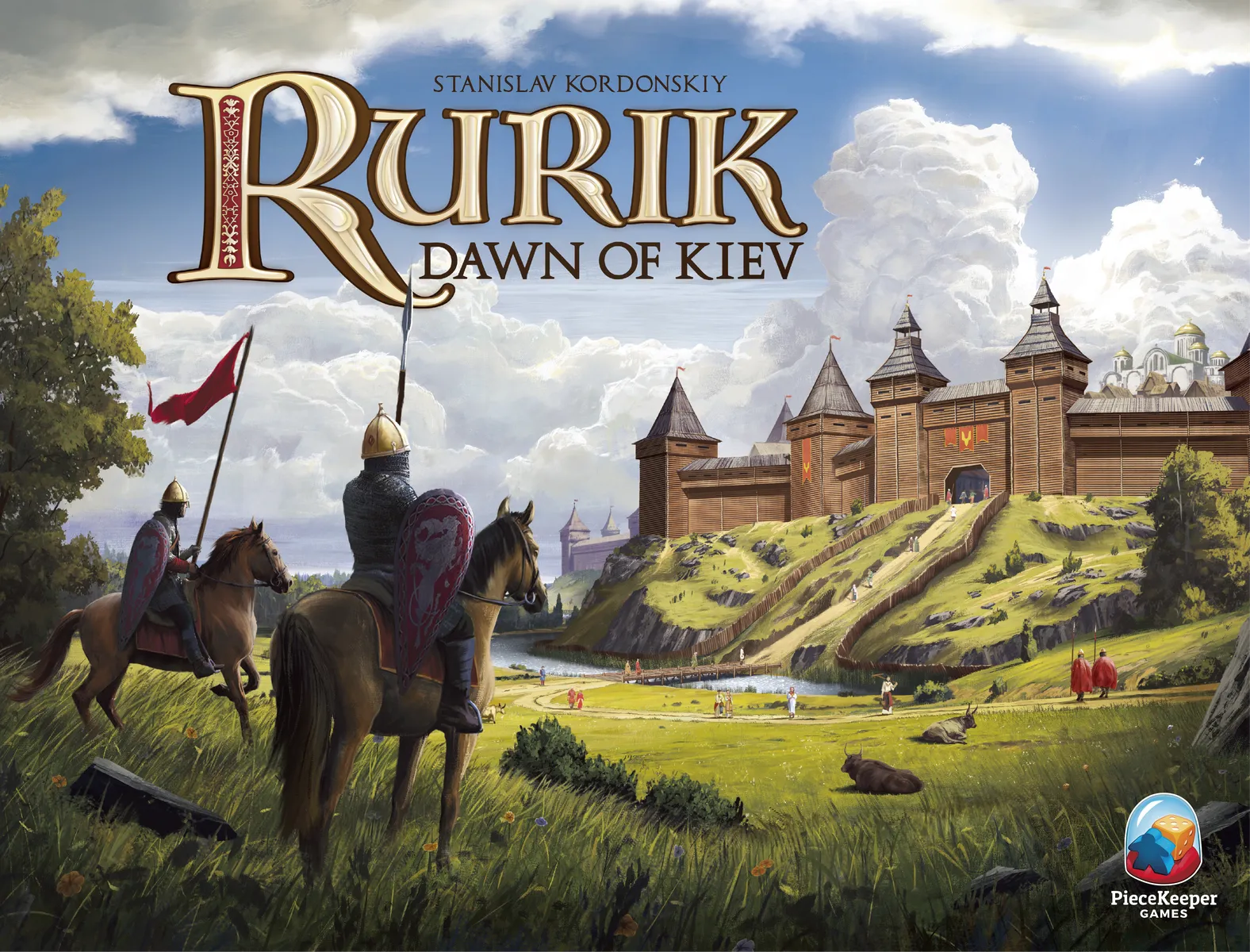
Foundational titles such as GSC Game World’s Cossacks series (2001) and Mount & Blade: With Fire & Sword (2011) established early modern Ukrainian statehood, directly challenging imperial peripheral framing. The board game Rurik: Dawn of Kiev (PieceKeeper Games, 2019) reclaims Kyivan Rus as a distinct regional power, while Bygoner (BGNR, TBA) explores 16th-century borderland memory within the Grand Duchy of Lithuania. Incorporating developer autoethnography from 1581: Eastern Frontier RPG (Kot, 2026), we demonstrate how core gameplay mechanics, centering Cossack self-governance, regional trade networks, and grassroots frontier survival, and dismantle top-down autocratic mythologies.
Analogue and indie medievalism serve as equally crucial sites of decolonial resistance (Kot, 2026). Aridnyk (Boardova, 2023) adapts Hutsul and Carpathian mythology to assert the distinct cultural heritage of western Ukraine. Concurrently, DeusloVult (Hiatus Games, 2019) employs satirical dark medieval manuscript art to deconstruct militaristic dogma, Crusader-era looting, and institutional propaganda.
Ultimately, while Russian state-aligned ludic media instrumentalizes pseudo-historical narratives to devalue Ukrainian statehood, Ukrainian developers leverage interactive history, folklore, and localized agency as potent mechanisms of civic resilience and decolonial resistance (Kot, 2026; Games Gathering, UCF, 2024).
Suggested Reading & Primary Sources
- Boardova. (2023). Aridnyk. [Board Game].
- Cyberia Nova. (2024). Smuta (The Time of Troubles). Internet Development Institute (IRI). [Video Game].
- GameDev DOU. (2024). Ukrainian History in Video Games: Developer Perspectives (Українська історія у відеоіграх: інтерв’ю). gamedev.dou.ua.
- Games Gathering & Ukrainian Cultural Foundation. (2024–2025). Research: Russian Propaganda in Video Games (Дослідження: Російська пропаганда в відеоіграх). Kyiv.
- GSC Game World. (2001). Cossacks: European Wars. [Video Game].
- Hiatus Games. (2019). DeusloVult. [Board Game].
- Yermolenko, V. ed. (2019). Re-Vision of History: Russian Historical Propaganda and Ukraine. NGO Internews Ukraine / K.I.S..
- Kot, Y. I. (2026). “Ukrainian Games of War: Born in the Flames of Invasion.” European Historical Game Studies, 1(1), 128–139.
- Mundfish. (2023). Atomic Heart. [Video Game].
- PieceKeeper Games. (2019). Rurik: Dawn of Kiev..
- Smola Game Studio / the Bratans. (2023-2025). Lizards Must Die 1 & 2 (Русы против Ящеров). [Video Game].
Dr. Yaraslau I. Kot (PhD, LLM, MPsych) is a researcher at European Humanities University and Adjunct Professor at the University of Warsaw. He serves as President of the Magnus Ducatus Foundation, Board member of the Ukrainian Association for Game Studies, and Founding Editor of the European Historical Game Studies journal. A game industry veteran since 1996, he has designed video games, board games, and LARPs (including Replaced, Chernobylite 1–2, and 1581: Eastern Frontier). He is author/editor of Central and Eastern European Histories and Heritages in Video Games and Ukrainian Games of War.
Thanks for this! How do this modern wave of Ukrainian medievalist games handle other peoples or powers from the time (Byzantines, Poles/Romanians, western Europeans, Caucasus peoples, Steppe peoples) if they ever appear? Do these games appeal to a more international/shared ideal of contesting the wider Russian ideology of Russia’s natural dominance over Slavic culture, or contesting imperialism in and of itself, or is the anti-colonial sentiment more distinctly national and really just focused on the direct Ukraine-Russia confrontation to the exclusion of other peoples?
Thank you for the fantastic insights and the examples you provided! Since you cite “Medievalism as Propaganda and Counter-Propaganda” in your paper’s title — what characterization (or subtype) of medievalism do you have in mind? And is such medievalism always genuinely and politically motivated?
This is really interesting, thank you. I’m curious about the role of ‘the state’ as it were here, as you note the Ukrainian context as producing different games and models of resistance through games, and also the work of indie games here – is there much room conversely for ‘resistant’ creation of games within Russia itself, e.g. any examples of Russian studios or developers trying to make games that don’t legitimate aggression/imperialism? Or is it very monolithic in terms of what is possible in that production context?
Thank you for this, Yaraslau. I wonder if you could talk a bit more about the game that you co-designed (1581) and how you & the team deal with these tensions in that particular design experience?