
“Role-playing games (RPGs) can be ludic, narrative, and social – but they are always on some level psychological experiences. The role-playing experience offers possibilities for studying psychological phenomena like personality and identity” (Bowman et al., 2013). Meanwhile, role playing can not only reveal information about personality and identity, but it can also influence the way players’ personalities evolve over time. This is particularly true of games that are played over prolonged periods, especially over several seasons. This study provides an autoethnographic account of a unique role-playing experience that extended over two decades.
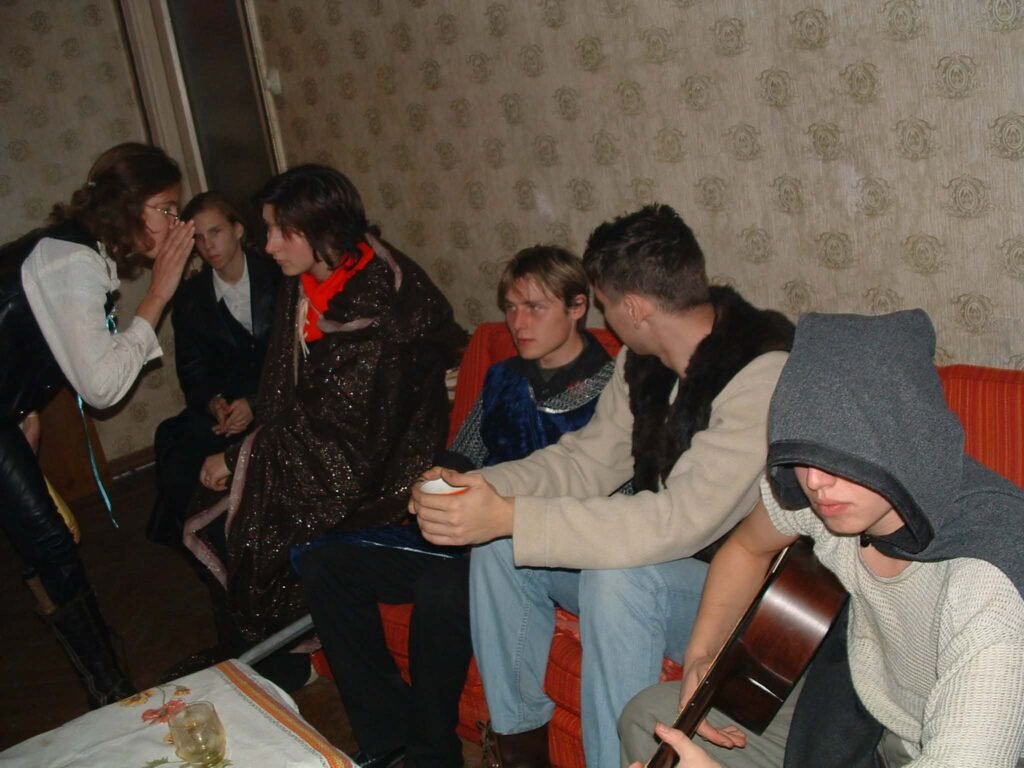
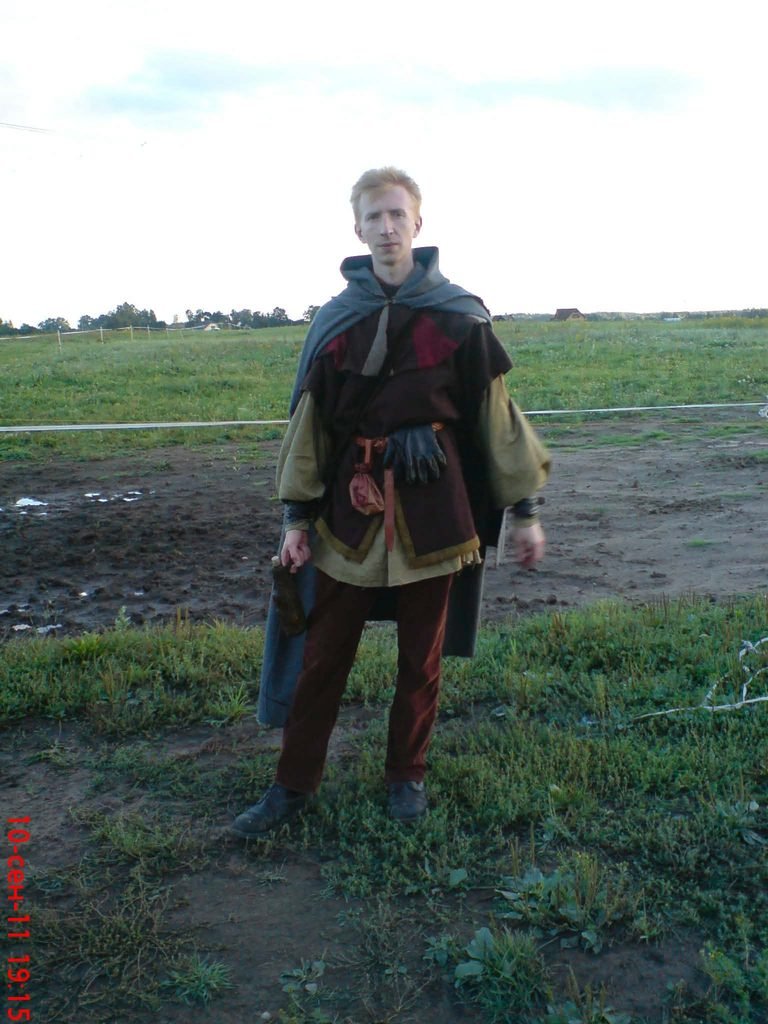
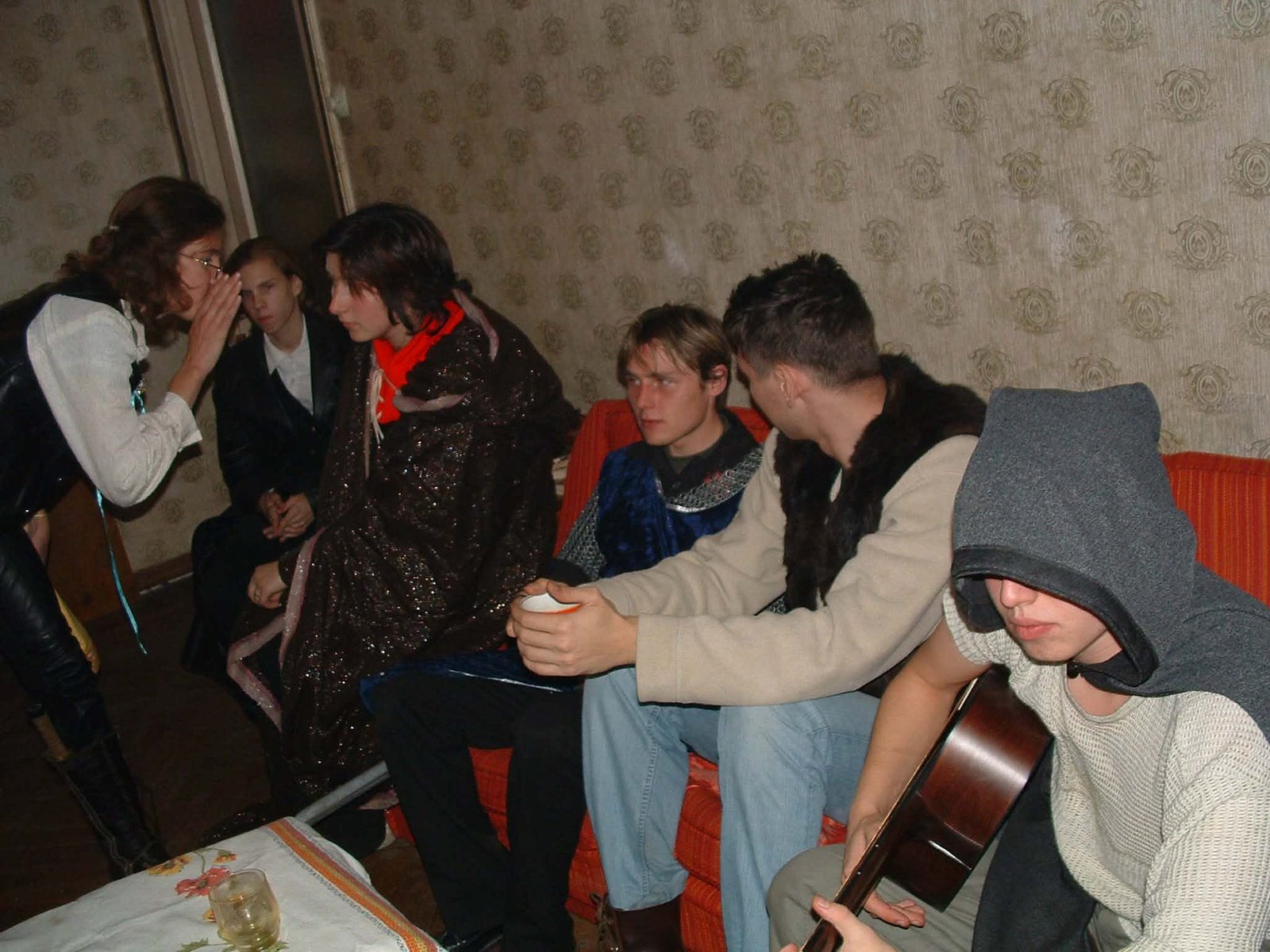
We have started playing as a group of LARPers during weekly meets in bars and occasional one-day events in the early 2000s. Over twenty years on, we were still playing, though by now the medium has shifted to asynchronous Messenger chatting and occasional live playing with 2-4 participants
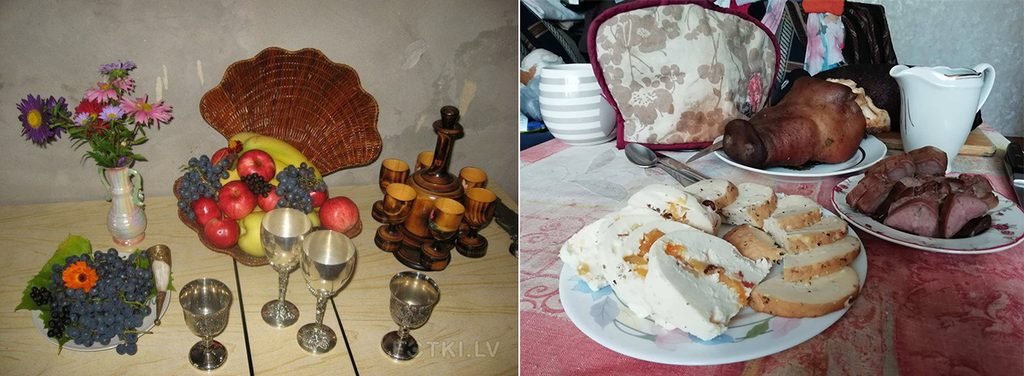
As the game world, which started off as a spin-off The Witcher, developed, including more emphasis on realistic details and more evolved, psychologically credible characters, I began to realise how closely my own character matched my identity, anxieties and aspirations. Starting off as an orphan vagabond, Etayn the half-Zerrikan would-be warrior unexpectedly found her Elf father whom she long thought dead. Later, with her newly found father’s mediation, she met a wealthy merchant at a party, and a fast, passionate love affair was struck. It was not planned, but the man playing the wealthy and influential guild member soon became my owner partner and later husband – but not before Reinmar has proposed to Etayn.
As life went on, some players left and others joined, the plot centring on a quest for a long-lost secret knowledge and artefacts in the world struck by wars, witch-hunting and political upheavals unfurled. The core group of players remained the same, and, eventually, the master suggested to the core players creating their “dark-side” antagonists, enabling the players to engage with their own socially undesirable selves.
I suggest using an autoethnographic approach to explain how, over two decades, not only the world of the game progressively evolved and darkened, with the playing mode adopting to new pressures (for instance, chatting instead of regular meetings during Covid-19), but also the characters became more complicated, at once replicating the players’ personalities, enabling them to enact their dreams or (in the case of their dark alter egos) their fears. According to Mazzucato et al., role playing “allows individuals to enhance their self-awareness regarding the effects of their ways of relating to themselves, others, and their environment, while simultaneously offering the opportunity to experiment and reinforce change” (2026). A game world modelled on the late Middle Ages but featuring alternative religions, species and magic enabled the players to create for themselves alternative live scenarios, which could be used not only to escape from reality but also to construct and try out safely possible situations, decisions and actions, some of which could then be used in their real lives.
Additional reading:
Blatner, A. (2000). Foundations of psychodrama: History, theory, and practice. Springer Publishing Company.
Bowman, Sarah Lynne and Lieberoth, Andreas (2018). Psychology and role-playing games. In Zagal, José P. and Deterding, S. (eds.), Role-Playing Game Studies: Transmedia Foundations. New York: Routledge, 245-264.
Löfstrand, P. and Zakrisson, I. (2025). Exploring the impact of role-playing exercises on cognitive and emotional processes: a social- and educational psychological perspective. Front. Psychol. 16:1645213. doi: 10.3389/fpsyg.2025.1645213.
Mazzucato, M., Savastano, M. and Iudici, A. (2026). Role-playing interventions in adult psychotherapy: a systematic review of clinical applications, reported outcomes, and future directions. Front. Psychol. 17:1749378. doi: 10.3389/fpsyg.2026.1749378
Did you find that the evolution of the game towards more psychological detail for the characters led to some players deciding it was going too deep or wasn’t the sort of escapism they were looking for any more? I think there’s an interesting potential tension between exploratory, creative escapism and a more simplified sort of escapism where people are looking for more simplicity and getting away from thinking through particular things.
Also, asking as someone who plays CRPGs and TTRPGs but has never done a LARP event, do you ever find that there are difficulties between the expectations of the medievalist setting and the very personal/embodied nature of LARP? Obviously as in the example you give in-character explorations absolutely can blur over into out-of-character feelings, which is something that worked out in the case you mention, but one comes across people in tabletop games who have e.g. expectations of using a “medieval” setting to enact for example particular sorts of misogynistic behaviour towards female NPCs or even players without pushback, I can imagine that being an even more difficult problem if you get those people in this much more embodied space.
Hi, thank you very much for your comment. Actually one of our friends did drop out explaining he was getting “too bored” of his character. Which is ironic, because, as the geopolitical situation unfolded and he came to be in a similar situation as that in the game world, his response was exactly the kind of response his character was producing. In the game, there is an ongoing war and sort of witch-hunts, the sort of thing that happens in the Witcher. In difference from the Witcher, there are also some groups that are marginalized from the outset, which is where it gets very personal, because the physical setting for our game has been Latvia, and most of the players over the years have been either ethnic Russians or those speaking Russian as their mother tongue despite the fact the players and often their parents were born on the territory of Latvia. Now you can guess many people are facing discrimination, including threatened and real infringement in rights (one of the best examples is the ban on the use of Russian at all levels of education, both private and public, and that includes the ban on kids speaking in Russian during the breaks). So in this situation someone who is playing an already marginalised character, viewed in the game world as a bit of a maniac and an outcast, could have withdrawn, because it was becoming “too much like the real thing,” even though the parallels are not complete.
Regarding discrimination, etc., the game master(s) were always careful to check out the details for credibility, and this includes medieval mentalities. Some stereotyping did and does take place, but, beyond playing sessions, there have always been conversations with the players to discuss exactly this sort of detail. Though we did have some caricaturesque NPCs of both genders, like “your stereotypic silly blonde” or “that macho guy.” The stereotypes were mostly modern and included for a laugh, not the sort of thing one “expects” to find in the Middle Ages. As we mostly know each other rather well, we are trying not take these attitudes personally but the way they are intended, to produce comic effects.
Congrats on keeping this going for twenty years, and maintaining it across different iterations. That’s really impressive. It’s fascinating to see how the purpose, or at least capabilities, changed over time.
Out of curiosity, how cohesive is the central plot. Are the secrets and artefacts explicitly linked together, or do their separate stories exist more independently?
Thank you very much for your comment and question.
We started out with separate quest for each character or group, but at the moment there is the core group going on a long quest for X number of artefacts after collecting all of which the quest will be complete. As some players also have their own little quests, this allows for flexibility if one person drops and we can’t find a replacement. And recently we started to play the company of our bad alter egos plotting against the players and hunting for the same artefacts, That’s less psychological, but pure fun – though of course exploring one’s dark side and being really evil is a psychological journey in itself (my character is a prehistoric super-powerful vampire queen, ruling a host of lamias).
[…] 5 – Analogue perspectives12h – ‘Possibles Lives: An Autoethnographic Journey into a Lifetime Engagement with One TTRPG/LARP’– Anastasija Ropa12h20 – ‘From “Docufiction” to “Lawplay” — On Speculative […]