
Pentiment (2021), developed by Obsidian Entertainment, presents a compelling case study of how digital media can engage with micro-historical and post-modern approaches to reimagine the Middle Ages. Set in a fictional 16th-century Bavarian village, the game employs a layered, non-linear narrative structure, hand-drawn art, and a focus on individual agency to mirror the fragmented, subjective nature of historical interpretation. By drawing on micro-historical methodologies, such as the emphasis on local, individual, and marginalized perspectives; and post-modern critiques of grand narratives and objective determinism, Pentiment challenges traditional historical representations influenced by positivism and reconstructionism, positioning players as active participants in the co-construction of meaning from incomplete evidence. This is unsurprising, given that narrative director Josh Sawyer graduated in History with a focus on Early-Modern Central Europe and a strong micro-historical perspective.
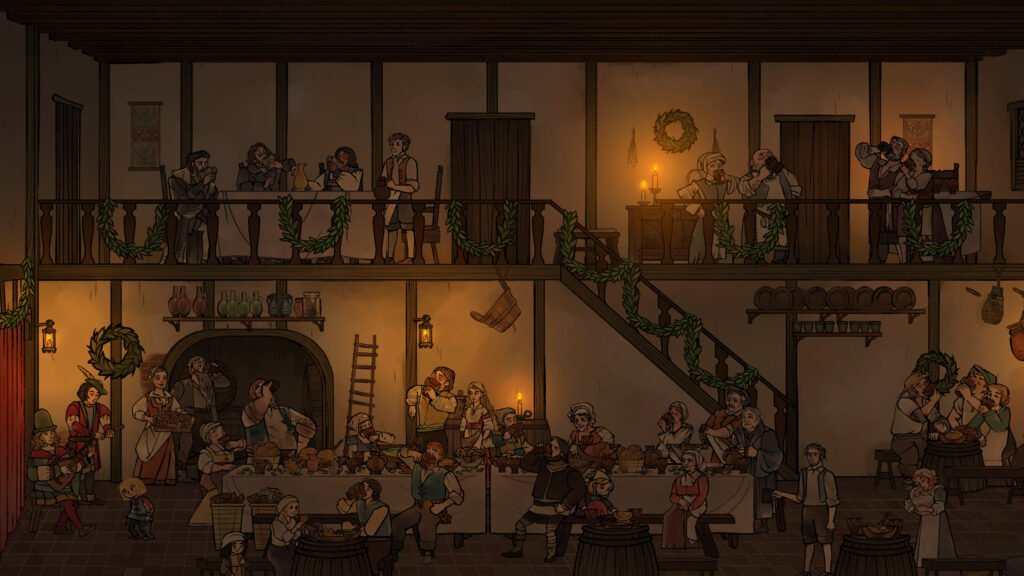
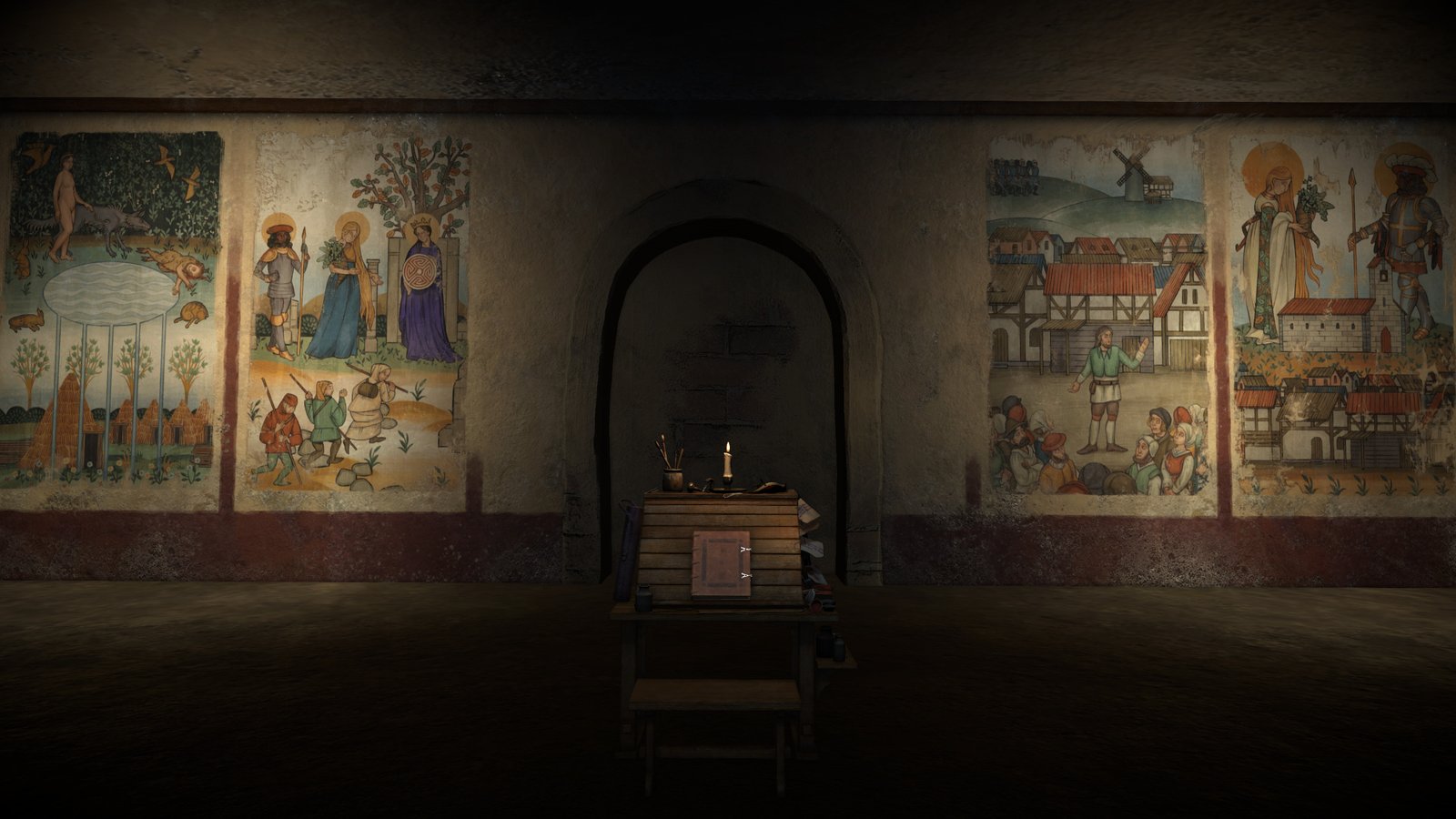
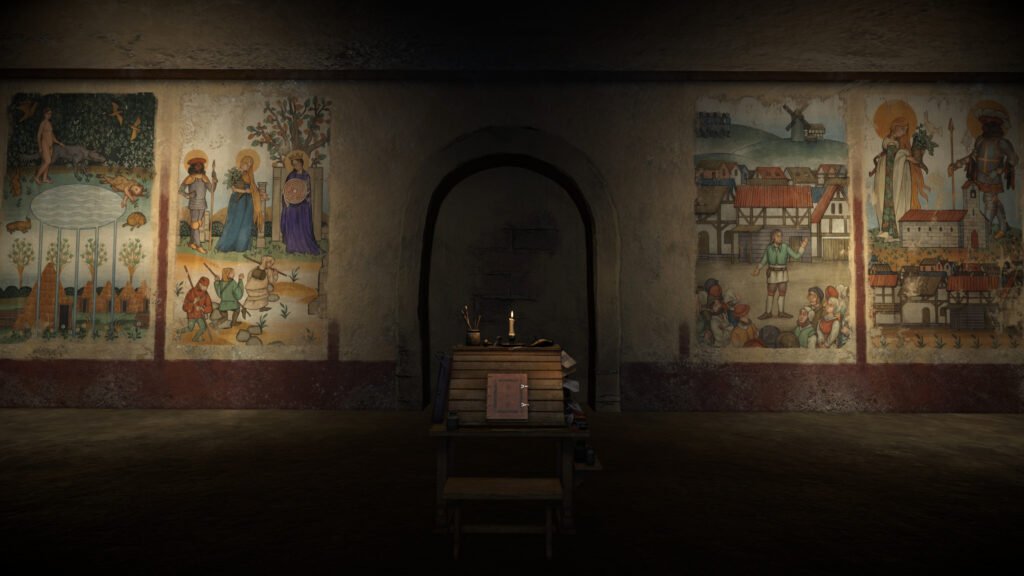
At its core, Pentiment constructs a fictional setting where history is not a fixed entity but a contested, evolving construct shaped by power dynamics, memory, and interpretation. The game’s first and second act protagonist, Andreas Maler, navigates a village embroiled in religious conflict, censorship, and ideological erasure, with their choices influencing the narrative’s trajectory. This design aligns with micro-historical approaches, which emphasize the importance of individual agency and localized contexts in understanding broader historical processes. The protagonist’s role as both witness and participant in historical events underscores the ethical complexities of historical representation, a theme central to the game’s critique of fixed accounts. The third act introduces Magdalene Druckeryn; her study of Tassing’s Roman past brings the player to a series of discoveries that must be represented in the city hall mural. Deciding whether to prioritize one version of the past over another -and how to navigate the townsfolk’s beliefs- demonstrates the responsibility of the subjective selection of historical narratives for future generations, while also introducing players to a complex historical period marked by religious wars and social violence.
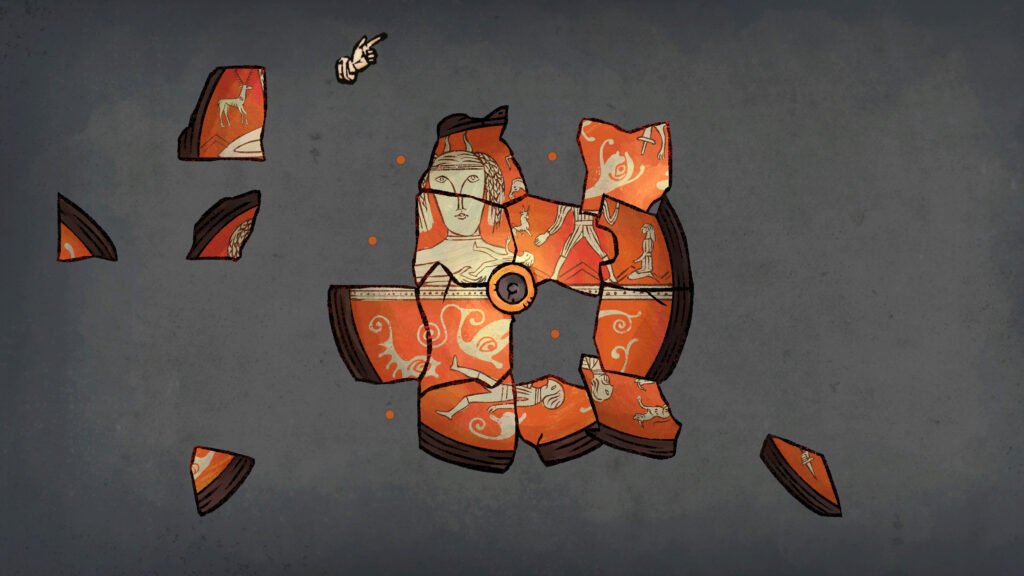
The game highlights these aspects through a detective-style, non-linear narrative, inviting players to piece together the village’s past through exploration and deduction. This approach resonates with the real-world role of archaeologists and historians, confronting historical ambiguity. The game’s structure aligns with deconstructionist principles, destabilizing fixed meanings and emphasizing the multiplicity of interpretations guided by the player’s agency. By presenting history as a puzzle to be solved rather than a linear story to be followed, Pentiment challenges the notion of objective truth, revealing how narratives are constructed, contested, reshaped and remembered over time.
Ultimately, its layered narrative structure, thematic depth, and commitment to non-violent, detective-driven engagement with history position it as a vital case study for scholars. This approach aligns with micro-historical and post-modern critiques of dominant narratives, emphasizing the necessity of interrogating power structures and the politics of representation. As such, Pentiment not only reimagines the Middle Ages but also models a democratic, reflexive engagement with history, one that invites players to act as judges, question the assumptions that shape the understanding of the past, and consider its implications for the future. The game represents a significant contribution to the growing discourse on medievalism in games, demonstrating how digital media can foster critical engagement with historiographical discourses through ludic non-linear structures.
Suggested readings
- Chapman, A. (2016). Digital games as history: How videogames represent the past and offer access to historical practice. Routledge, Taylor & Francis Group.
- Haasis, L., & van Beek, A. L. (2024). Interview and Q&A with Josh Sawyer, Game Director of ‘Pentiment’. MIttelalter. Interdisziplinäre Forschung und Rezeptionsgeschichte. https://doi.org/10.26012/MITTELALTER-31324
- Wright, E. (2024). “Layers of History”: History as Construction/Constructing History in Pentiment. ROMchip: A Journal of Game Histories, 6(1).
Thank you for your paper, Ian! I’m always dying to talk about Pentiment, and very glad you brought it up.
You talked about deconstructionism and the critique of objective truth, which feature prominently in Chapman’s book and the postmodern historiography that inspired him. But one of the criticisms postmodernism has received (e.g. from Marxist historiography) is that this skepticism towards truth can ultimately culminate in a fantasy that anything can be freely interpreted into or out of existence, with no consequences, notwithstanding the material imperatives that condition our existence.
Some games have pushed hard against this, making it clear that, while we are free to make our own interpretations, some are right and some are flat out wrong. Ex: in 1000xResist, we get to decide which characters we’d like to memorialize (not unlike the murals in Pentiment), but choosing evil ones, or failing to choose the one belonging to an oppressed minority, results in a game over. The implication being that there is no prospect for the future without historical reparations or the cessation of oppression. Likewise, in “Future? No Thanks!” we can invite anyone to speak at our funeral. But, if we call people with obnoxious ideologies, the game auto-skips their speeches. Again, stressing the point that not all viewpoints are worthy.
Pentiment is less politicized than these two games, and accordingly afford players much more freedom. You mentioned in the caption to figure 4 that you were afraid of upsetting Tassing’s population, but we’re not really punished for the mural in any meaningful way. Don’t you think this takes the ‘bite’ off the game, somewhat?
Rob: if you’re reading this, I know you mentioned you disliked Pentiment’s open-endedness before. Were you coming from a similar angle?
[…] Trade Networks and Possible Worlds in The Elder Scrolls Series’– Ricardo Santana16h40 – ‘When an era comes to an end: agency, memory and micro-history in Pentiment’– Ian […]